About Us
About HVAC School Florida
HVAC School Florida is an air conditioning training school for South Florida — Miami-Dade, Broward and Palm Beach County — built around time with tools in hand rather than slides on a screen.
A trade school for people who want to work with their hands
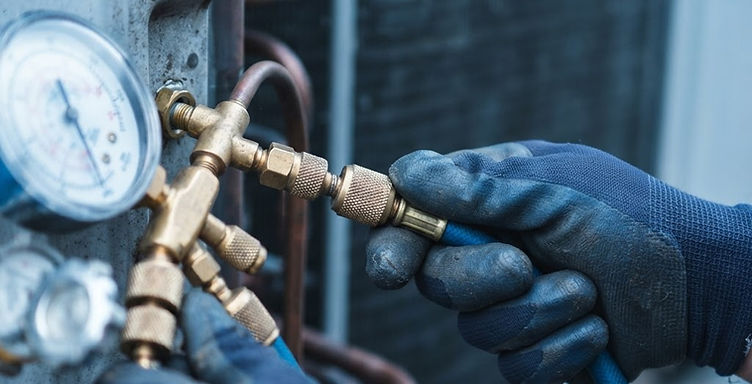
Our program teaches the work technicians actually do: connecting gauges and reading pressures, calculating superheat and subcooling, tracing an electrical fault with a multimeter, brazing and evacuating a line set, and diagnosing a system that will not cool instead of guessing at parts.
Training is designed for beginners with no background in the trade, for people changing careers, and for technicians already working in the field who want a formal foundation. Students come from across South Florida, and the curriculum is focused on the cooling equipment that dominates this market — split systems, heat pumps, mini-splits and packaged rooftop units — instead of northern heating systems you may never open.
Classes combine lab work on real equipment with the theory behind it, and the EPA 608 certification exam is part of the program, because you cannot legally handle refrigerant without that card. Our instructors are working technicians, which means the faults students troubleshoot in class are the same faults showing up on service calls this week.
HVAC School Florida is run by that instructor team, and we keep the process simple: one short qualification form, a reply by email, and a clear answer about whether the program fits what you are trying to do. If you would rather read first, the journal covers how to compare HVAC programs, what the first months of training look like, and what employers in South Florida hire for.
What we teach
Repair, installation and maintenance of residential and light commercial cooling systems — pressures, superheat, electrical troubleshooting, airflow and EPA 608 exam preparation.
Who it is for
People in Miami-Dade, Broward and Palm Beach County starting a new trade, career changers who want a practical skill, and working technicians who want formal training.
Who builds it
HVAC School Florida is run by South Florida instructors who still work on equipment in the field. Everything on this site is published by that team, and every question reaches them directly by email.
Common questions
Do I need experience to enroll at HVAC School Florida?
No. Training starts from the fundamentals: how a cooling system works, how to use manifold gauges and a multimeter safely, and how to read a wiring diagram. Students who already work in the trade can still start at the beginning or concentrate on diagnostics and installation.
What does the training program cover?
Repair, installation and maintenance of residential and light commercial cooling systems: pressures, superheat and subcooling, electrical troubleshooting, brazing and evacuation, charging by weight, airflow and static pressure, and EPA 608 exam preparation.
Is EPA 608 certification part of the course?
Yes. EPA 608 preparation is included in the program, because a technician cannot legally handle refrigerant without the certification card and most employers will not send someone on a service call without one.
Which areas of Florida do you serve?
Training serves Miami-Dade County, Broward County and Palm Beach County. Tell us which county you live in when you get in touch and we will point you to the closest training option.
How do I get the program details?
Complete the short qualification form on this site — career goal, experience level and location — or email contact@hvacschoolflorida.sbs. Every request is answered by email by the instructor team; there is no phone line or messaging app.
Can I train while working full time?
Yes. Many students keep their jobs while they train, and the lab work is planned around that. Ask about the current class schedule when you request the program details.
Do I need my own tools to start training?
No. The lab has the manifold gauges, meters, recovery machines and training units. If you already own hand tools, bring them, but you do not need to buy equipment before you start.
How long does the training take?
Program length and the current class schedule change through the year, so we do not publish them here. Request the details and the team will email you the current duration, class times and next start options.
What jobs can I do after the training?
Graduates usually start in residential service and maintenance, installation crews, or commercial and refrigeration apprenticeship roles. Training prepares you for the entry-level technical work; hiring decisions always belong to the employer.
Do you help students find work after the course?
The team can tell you by email which employers in South Florida currently hire from the program and how interviews usually work. No school can promise a job, and we will never make that promise.
Want to see if the program fits?
Request the program details from HVAC School Florida by email and we will send the schedule, training locations and next steps.